
← Back to DCC Homepage

Zoning Compatibility & Operational Safety Report

An empirical land-use analysis detailing why high-voltage regional industrial hubs require proper manufacturing buffer zones away from active student corridors.

Historical Reality & Land-Use Ethics

Industrial Equipment Demands Industrial Buffer Zones

To move forward objectively, our neighborhood must focus on empirical municipal planning models. High-voltage infrastructure carries an inherent, documented mechanical and thermal failure rate. We do not oppose core regional utilities—we oppose the structural misplacement of heavy industrial equipment into high-pedestrian corridors that violate established Chicago Zoning Ordinance Land-Use Standards.

When a cooling oil fire or insulation blowout occurs within an isolated Manufacturing (M) Zone, it is a localized equipment failure safely absorbed by surrounding industrial property barriers. But when that exact same failure occurs on a dense commercial or residential corridor, it triggers multi-ward school lockdowns, public evacuations, and severe neighborhood smoke exposure.
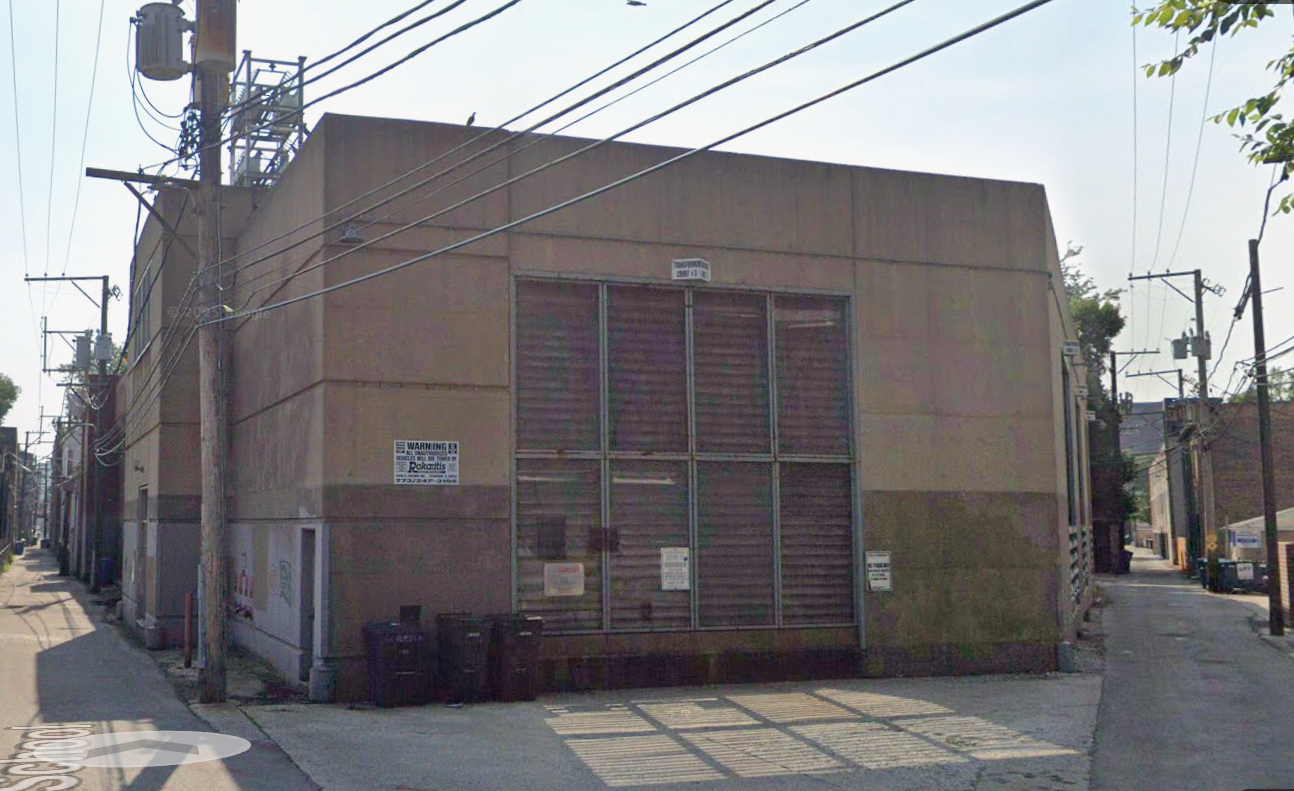
🚨 Critical Safety History at this Site The Historical Blueprint: Longtime neighbors draw directly from unvarnished history. On February 18, 2006, the original Lakeview substation at this exact location suffered a catastrophic equipment failure. Pressurized cooling oil leaked and ignited, creating heavy plumes of black smoke and breaching structural walls before forcing a full decommissioning audit filed with the Illinois Commerce Commission (ICC) on page 6.
The current decommissioned substation infrastructure at the Diversey site, highlighting the heavy industrial structural footprint adjacent to neighborhood spaces.
The current decommissioned substation infrastructure on site—serving as a stark physical reminder of the block’s long-term utility footprint and the 2006 infrastructure failure.

Documented Regional Infrastructure Incidents

A clear pattern of localized equipment failures across urban and suburban footprints highlights why hazard isolation matters:

Oct 2025
Hoffman Estates Substation: A massive transformer fluid fire burned for over four hours along an isolated tollway corridor—resulting in zero community exposure or school health hazards. Verified via CBS Chicago ComEd Incident Logs.
Aug 2024
West Loop Vault Fire: A cooling oil and heavy insulation fire generated dense black smoke and explosive gas detonations in a commercial hub, cutting power and forcing evacuations. See the CBS Chicago West Loop Live Coverage.
Apr 2021
Norridge Substation Blowout: A major thermal equipment blast at 8275 W. Montrose Ave. blanketed nearby parking lots in heavy petroleum smoke. Tracked in the CBS News Norridge Response Report.
May 2018
Loop Substation Arc Flash: A high-voltage arc explosion at a transit substation blew heavy structural panels completely off a transformer housing, causing critical burn injuries to three crew members. Documented via NBC Chicago On-Scene Report.

Hazard Isolation

Modern municipal planning models from organizations like the American Planning Association dictate that high-voltage transformers and large petroleum insulating fluid reservoirs belong in low-density manufacturing sectors away from active school corridors.

Containment Footprints

First responders cannot safely apply water streams to an active high-voltage substation fire until the electrical grid is systematically grounded. Standard protocols from the national International Association of Fire Fighters mandate keeping a distance and letting the oil burn out inside a safe physical buffer zone.

Thermal Management

Enclosing massive electrical nodes within windowless concrete walls requires heavy industrial ventilation and cooling systems to manage intense heat loads, introducing continuous acoustic and structural burdens directly against residential property lines. Read more about these constraints in the Transcend Substation Planning Framework.

SCHOOL SAFETY ZONE

This regional industrial hub is proposed within a block of multiple educational centers:

Kensington School
(Infant – Pre-K)

Growing Seeds
(Preschool)

Harriet Tubman Elementary
(K-8)
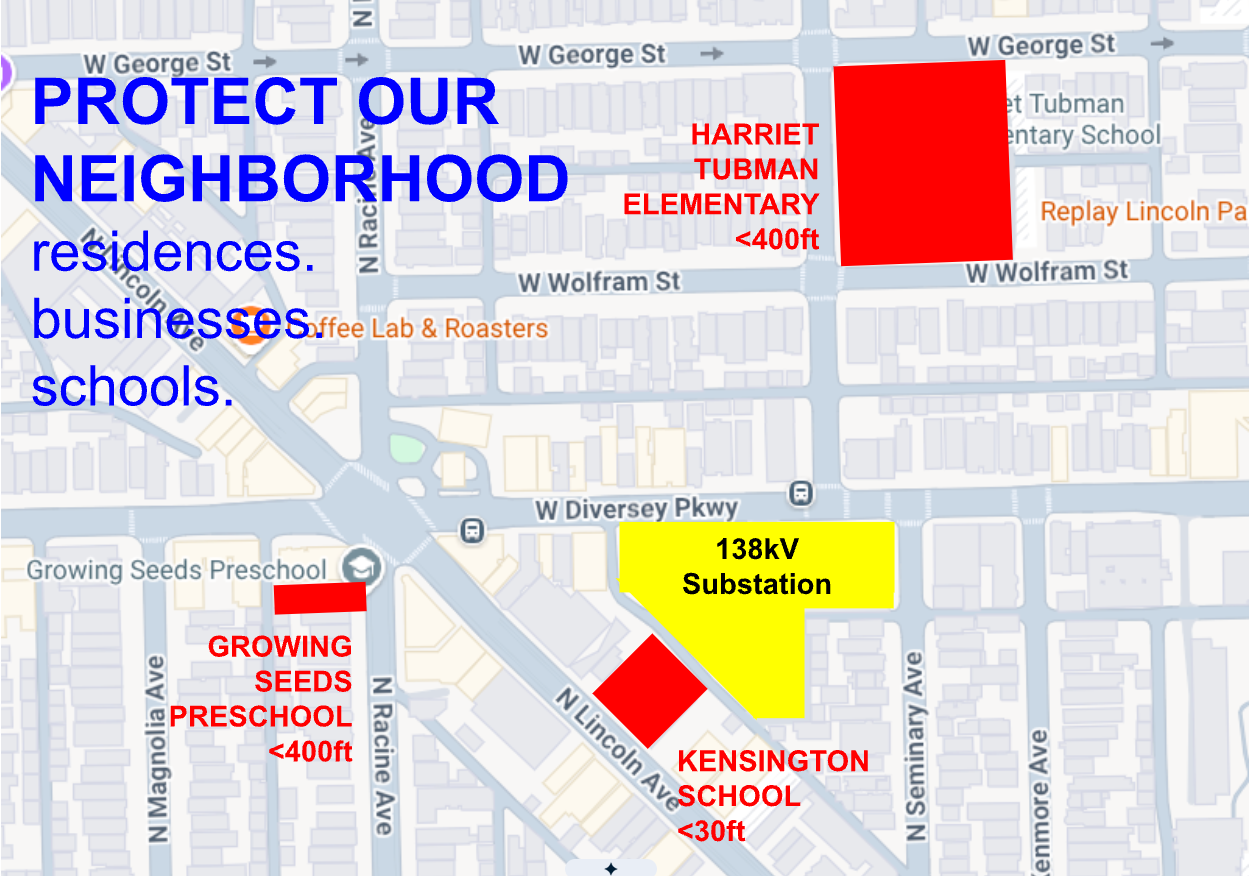
Detailed Map Showing Proximity of Substation to Three Schools
🔍 Click Image Above for Full Scale Map

Protect Our School Safety Corridors

Now that you have audited the safety metrics, help us protect local student corridors by logging a formal public comment with the state.

Take Action: File ICC Comment →